
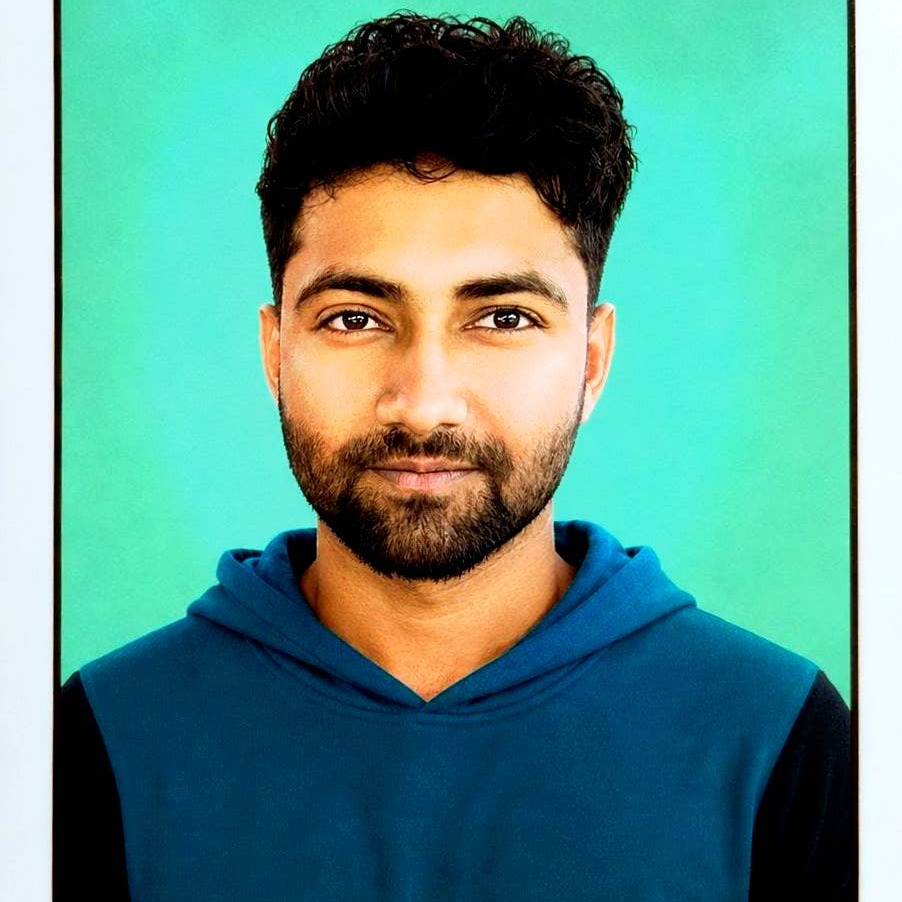
Abir Mukherjee
Online
About :
Abir Mukherjee is a Hindustani Classical Tabla educator with 15 years of learning experience and 7 years of teaching experience. Holding a Bachelor of Performing Arts (B.P.A.) in H…
Abir Mukherjee is a Hindustani Classical Tabla educator with 15 years of learning experience and 7 years of teaching experience. Holding a Bachelor of Performing Arts (B.P.A.) in Hindustani Classical Music (Tabla) from Visva-Bharati University, he has developed a strong foundation in Indian classical rhythm and performance. Fluent in Bengali, Hindi, and English, he teaches students across different age groups with a structured and student-focused approach. Based in Chowhatta, Sainthia Road, Bardhaman, West Bengal, he emphasizes rhythm, technique, musical understanding, and disciplined practice to help learners steadily develop their tabla skills.
Abir Mukherjee
Online
Abir Mukherjee is a Hindustani Classical Tabla educator with 15 years of learning experience and 7 years of teaching experience. Holding a Bachelor of Performing Arts (B.P.A.) in H...
Abir Mukherjee is a Hindustani Classical Tabla educator with 15 years of learning experience and 7 years of teaching experience. Holding a Bachelor of Performing Arts (B.P.A.) in Hindustani Classical Music (Tabla) from Visva-Bharati University, he has developed a strong foundation in Indian classical rhythm and performance. Fluent in Bengali, Hindi, and English, he teaches students across different age groups with a structured and student-focused approach. Based in Chowhatta, Sainthia Road, Bardhaman, West Bengal, he emphasizes rhythm, technique, musical understanding, and disciplined practice to help learners steadily develop their tabla skills.
FindMyGuru is a tutor discovery platform that helps students find and connect with experienced tutors and institutes across a wide range of subjects and skills. Students can explore tutor profiles, compare expertise, and contact tutors directly for online or in-person learning.FindMyGuru facilitates discovery and connections between students and tutors or institutes. All classes and learning arrangements are handled directly between students and the respective tutors or institutes
Courses by Abir Mukherjee
Online
2 Hour
Bengali, Hindi, English
Bardhaman, Chowhatta, Sainthia Road
On Call
Week Days / Weekends
Tabla (H.C.M)
Building a Strong Foundation in Hindustani Classical Tabla
Tabla is one of the most expressive and important percussion instruments in Indian classical music. Known for its rich tonal quality and rhythmic complexity, it plays a vital role in solo performances, vocal accompaniment, instrumental music, and various contemporary musical forms. Learning tabla helps students develop rhythm awareness, concentration, listening skills, and musical discipline.
This Hindustani Classical Tabla course is designed to support learners at different stages of their musical journey. Whether someone is beginning their first lessons or looking to deepen existing knowledge, the course offers a structured learning path that focuses on both practical playing and theoretical understanding.
Exploring the Language of Rhythm
Rhythm forms the backbone of music, and tabla serves as a powerful medium for understanding rhythmic structures. Students gradually learn how different bols, talas, and rhythmic patterns work together to create musical compositions.
Through regular practice and guided instruction, learners become familiar with:
Basic tabla strokes
Hand positioning techniques
Sound production methods
Rhythmic counting systems
Traditional compositions
Tempo control and timing accuracy
The course encourages students to understand rhythm not only as a technical skill but also as a form of musical expression.
Understanding Essential Talas and Compositions
A major component of tabla learning involves understanding talas, which are rhythmic cycles used throughout Indian classical music. Students are introduced to foundational talas before progressing to more advanced rhythmic structures.
Core Talas Included in the Learning Path
Learners gain practical and theoretical knowledge of important talas such as:
Teen Taal
One of the most widely used rhythmic cycles in Hindustani Classical Music, helping students understand balance, structure, and improvisation.
Dadra
A popular six-beat cycle commonly used in light classical and devotional music.
Keherwa
An eight-beat tala frequently used across folk, devotional, and contemporary musical forms.
Rupak
A seven-beat rhythmic cycle that introduces students to varied rhythmic phrasing and composition structures.
Students also explore traditional compositions, kaydas, relas, tukras, and other rhythmic forms that contribute to a comprehensive tabla education.
Practical Learning Through Guided Exercises
Developing proficiency on the tabla requires consistent practice and technical precision. This course includes practical exercises designed to strengthen coordination, finger control, speed, and rhythmic stability.
Focus Areas During Practice Sessions
Regular practice sessions help students work on:
Finger movement accuracy
Clarity of bols
Speed development
Hand coordination
Rhythmic consistency
Musical expression
Listening and response skills
Each lesson builds upon previous concepts, allowing learners to progress steadily without feeling overwhelmed.
Developing Performance and Accompaniment Skills
Tabla musicians often perform both as solo artists and accompanying performers. This course introduces students to the techniques required for different musical settings.
Learning the Art of Accompaniment
Students learn how tabla interacts with:
Hindustani vocal music
Instrumental performances
Bhajans and devotional music
Semi-classical compositions
Understanding accompaniment helps learners become more versatile musicians while improving their listening and responsiveness during performances.
Enhancing Solo Performance Confidence
Students interested in solo tabla presentation are guided through:
Structured compositions
Presentation techniques
Improvisation methods
Stage preparation
Rhythmic variations
These skills contribute to greater confidence and a deeper understanding of musical performance.
Personalized Learning for Different Skill Levels
One of the strengths of this course is its adaptability. Lessons are adjusted according to each student's age, prior experience, and learning goals.
Suitable for Various Learners
The course supports:
Complete beginners
School students
College learners
Music enthusiasts
Intermediate tabla players
Advanced students refining performance skills
Instruction is available in Bengali, Hindi, and English, allowing students to learn comfortably in their preferred language.
Strengthening Musical Understanding Beyond Technique
Learning tabla extends beyond mastering strokes and rhythms. Students also develop a broader understanding of Indian classical music traditions and rhythmic theory.
Topics Covered in Theory Sessions
Theoretical learning may include:
Tala structure
Matra and Vibhag concepts
Tabla terminology
Composition analysis
Historical background of tabla
Practical application of rhythmic concepts
This balanced approach helps students connect technical skills with musical understanding.
A Structured Path Toward Long-Term Musical Growth
Consistent practice, guided learning, and a strong foundation are essential for progress in classical music. This tabla course encourages disciplined learning while allowing students to appreciate the artistic and cultural depth of Hindustani Classical Music.
Through rhythm training, practical exercises, theoretical knowledge, and performance-oriented learning, students gain the skills needed to continue their musical development with confidence and clarity.
FAQs
1. How long does it take to learn tabla basics?
Most beginners can learn fundamental strokes, simple bols, and basic talas within a few months through consistent practice. Progress depends on practice frequency and individual learning pace.
2. Is this tabla course suitable for complete beginners?
Yes. The course is designed for beginners, intermediate learners, and advanced students. Lessons start with foundational techniques and gradually progress to more complex concepts.
3. What topics are covered in Hindustani Classical Tabla training?
Students learn posture, hand techniques, bols, talas such as Teen Taal and Keherwa, tabla theory, accompaniment methods, improvisation, compositions, and performance-oriented skills.