Find My Guru logo
  • Top Skills
    • Python Programming
    • Yoga
    • Dance
    • Music
    • Guitar
    • Hindi Speaking
    • Drawing
    • Painting
    • Chess
    • Digital Marketing
    • View All Skills
  • Top Locations
    • Online
    • Hyderabad
      • Ameerpet
      • Kukatpally
      • Dilsukhnagar
      • Madhapur
      • Gachibowli
    • Bangalore
      • Whitefield
      • Marathahalli
      • HSR Layout
      • Koramangala
      • Indiranagar
    • Mumbai
      • Andheri West
      • Mira Road East
      • Kandivali West
      • Kandivali East
      • Malad West
    • New Delhi
      • Dwarka
      • Rohini
      • Hauz Khas
      • Mukherjee Nagar
      • Laxmi Nagar
    • Chennai
      • Anna Nagar
      • Madipakkam
      • Adyar
      • Mylapore
      • Velachery
    • Pune
      • Hinjewadi
      • Wakad
      • Baner
      • Pimple Saudagar
      • Balewadi
    • Gurgaon
      • DLF Phase 5
      • Golf Course Road
      • Sector 31
      • Sector 56
      • Palam Vihar
    • Noida
      • Sector 125/126 Amity University
      • Sector 137 Expressway
      • Sector 18-15
      • Sector 27 (Atta Market)
      • Bisrakh
    • Kolkata
      • Newtown
      • Bidhannagar
      • Garia
      • Behala
      • Jadavpur
    • Ahmedabad
      • Satellite
      • Bopal / South Bopal
      • Navrangpura
      • Prahlad Nagar
      • Vastrapur
    • View All Locations
  • Pricing Plans
  • Tutor Login
  1. Blog/
  2. IT Courses/
  3. What is Cloud Computing? A beginner's guide
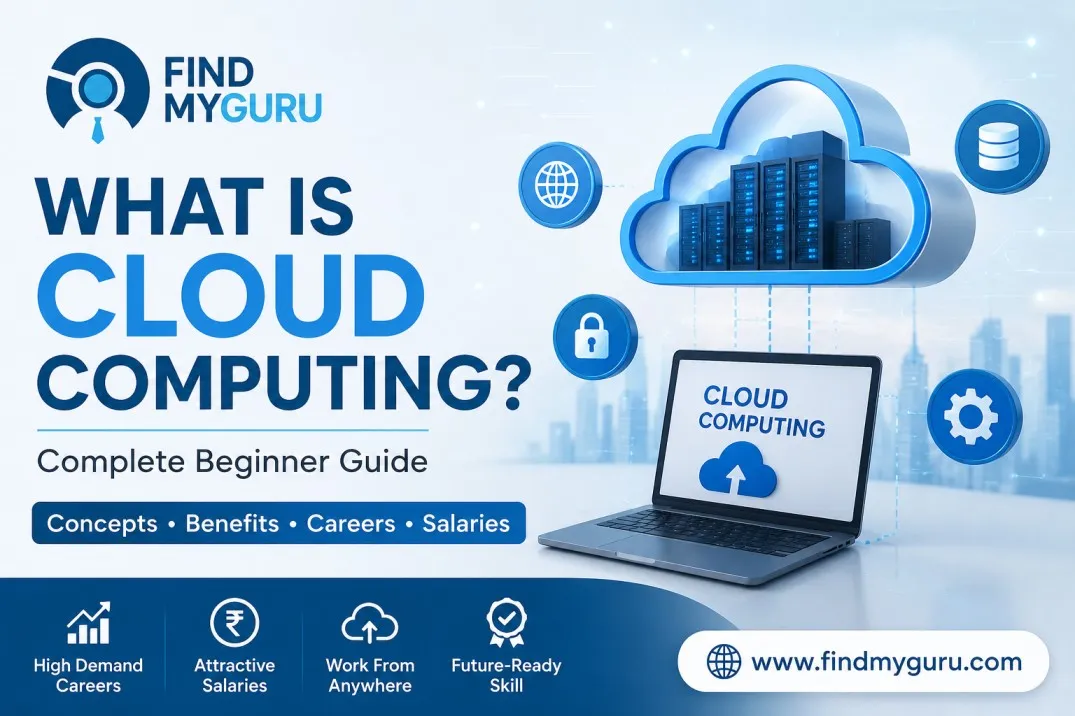
What is Cloud Computing? A beginner's guide

What is Cloud Computing? A beginner's guide

What Is Cloud Computing?

The Cloud computing is the delivery of computing services such as servers, storage, databases, networking, software, and analytics over the internet. Instead of buying and maintaining physical hardware, users access computing resources on demand and pay only for what they use.

The importance of cloud computing continues to grow as businesses, educational institutions, startups, and government organizations move their operations online. Whether you use email, online storage, video streaming platforms, or digital collaboration tools, you are already using find tutors online and cloud computing in daily life.

According to industry reports from Statista and Gartner, global cloud spending continues to rise significantly, with organizations increasing investments in cloud infrastructure, security, and artificial intelligence services through 2025 and 2026.

What Is Cloud Computing in Simple Words?

Cloud computing means using computing resources through the internet instead of relying entirely on a personal computer or local server.

A cloud provider owns and manages large data centers. Users access those resources whenever needed through an internet connection.

Definition of Cloud Computing

Cloud computing is a technology model that provides on-demand access to shared computing resources including storage, processing power, applications, and networking services through the internet with minimal management effort.

For example, when a student stores notes in an online drive, attends a virtual class, or uses an online coding platform, cloud computing makes those services possible.

How Does Cloud Computing Work?

Cloud computing works through a network of remote servers located in data centers around the world. These servers store data, run applications, and process information on behalf of users.

When someone accesses a cloud-based application, their request travels through the internet to a cloud server. The server processes the request and returns the required information almost instantly.

This approach eliminates the need for organizations to purchase expensive hardware for every computing requirement.

What Are Data Centers?

Data centers are facilities containing thousands of servers, networking devices, storage systems, and security infrastructure.

Major cloud providers operate large-scale data centers across multiple geographic regions to ensure reliability, speed, and business continuity.

Companies such as Amazon Web Services, Microsoft, and Google manage some of the world's largest cloud infrastructures.

Why Is Cloud Computing Important?

Cloud computing helps organizations scale quickly, reduce infrastructure costs, and improve operational efficiency.

Businesses no longer need to purchase large amounts of hardware before growth. Instead, they can increase or decrease resources based on demand.

This flexibility has made cloud computing a foundational technology for digital transformation across industries.

Key Benefits of Cloud Computing

Cloud computing offers several advantages for organizations and individual users.

It reduces upfront infrastructure expenses because resources are rented rather than purchased. It also improves accessibility since users can access applications and data from almost anywhere.

Cloud services provide automatic updates, enhanced disaster recovery options, better collaboration capabilities, and faster deployment of applications.

The Research from Gartner indicates that cloud adoption remains one of the highest-priority technology investments for enterprises worldwide due to its impact on agility and innovation.

What Are the Different Types of Cloud Computing?

Cloud computing can be categorized based on deployment models.

Understanding these models helps learners and businesses choose the right cloud environment.

Public Cloud

A public cloud is owned and managed by a third-party provider.

Resources are shared among multiple customers while maintaining security and isolation. Most individuals and businesses use public cloud services because they are cost-effective and easy to deploy.

Private Cloud

An private cloud is dedicated to a single organization.

It offers greater control, customization, and security. Large enterprises often use private clouds for sensitive workloads and regulatory compliance.

Hybrid Cloud

The hybrid cloud combines public and private cloud environments.

Organizations can move workloads between environments based on performance, cost, or security requirements.

Many modern enterprises prefer hybrid cloud strategies because they offer flexibility and operational efficiency.

What Are Cloud Service Models?

Cloud services are generally divided into three major categories.

A Each model serves different technical and business needs.

Infrastructure as a Service (IaaS)

A IaaS provides virtualized computing resources such as servers, storage, and networking.

Organizations manage applications while the provider manages physical infrastructure.

Examples include virtual machines, cloud storage, and networking services.

Platform as a Service (PaaS)

PaaS provides a development platform where developers can build, test, and deploy applications without managing hardware.

This model speeds up software development and reduces infrastructure complexity.

Software as a Service (SaaS)

SaaS delivers software applications through the internet.

A Users access applications through web browsers without installing software locally.

Popular examples include email platforms, collaboration tools, and learning management systems.

Where Is Cloud Computing Used?

Cloud computing powers many services people use every day.

Educational platforms rely on cloud infrastructure for online classes, content delivery, and student management systems.

Healthcare organizations use cloud technologies for secure patient records and telemedicine services.

Financial institutions leverage cloud platforms for analytics, fraud detection, and customer services.

E-commerce companies depend on cloud computing to handle website traffic, inventory management, and digital payments.

Artificial intelligence, machine learning, Full Stack Java Developer Course,big data analytics, cybersecurity, and mobile applications also heavily depend on cloud infrastructure.

What Skills Are Needed for Cloud Computing?

Cloud computing professionals require a combination of technical and practical skills.

Networking fundamentals form the foundation of cloud knowledge. Understanding operating systems, virtualization, databases, security practices, and cloud architecture is equally important.

Professionals often learn scripting languages, automation tools, container technologies, and monitoring systems to manage cloud environments effectively.

As cloud platforms evolve, continuous learning remains essential for career growth.

Is Cloud Computing a Good Career in India?

Yes, cloud computing has become one of the fastest-growing technology career fields in India.

Organizations across sectors are migrating applications and infrastructure to cloud environments. This demand has created opportunities for cloud engineers, cloud architects, DevOps engineers, cloud security specialists, and cloud consultants.

India's digital economy, startup ecosystem, and enterprise modernization efforts continue to increase demand for cloud-skilled professionals.

According to reports from NASSCOM and industry hiring platforms, cloud-related roles remain among the most sought-after technology positions in the country.

Cloud Computing Career India: Popular Job Roles

Cloud engineers design and manage cloud infrastructure.

Cloud architects create large-scale cloud solutions for organizations.

DevOps professionals automate software delivery and cloud operations.

Cloud security specialists protect systems, applications, and data within cloud environments.

Site reliability engineers focus on maintaining performance, scalability, and reliability.

These roles offer strong career progression and opportunities across industries.

What Is the Cloud Computing Salary India Professionals Can Expect?

The cloud computing salary India professionals earn depends on experience, certifications, location, and technical expertise.

Entry-level professionals often start with competitive salaries compared to many traditional IT roles.

Mid-level cloud engineers with practical experience in platforms such as AWS, Azure, or Google Cloud typically earn significantly higher compensation packages.

Senior cloud architects and cloud security experts can command premium salaries due to their specialized expertise.

Industry salary reports from platforms such as AmbitionBox, Glassdoor, and Naukri consistently show strong compensation trends for cloud-related roles through 2025 and 2026.

How Can Beginners Learn Cloud Computing?

Beginners should start with foundational concepts before moving to advanced cloud services.

Learning networking, operating systems, and virtualization provides a strong technical base.

Practical experience is equally important. Many cloud providers offer free learning resources, labs, and certification pathways that help learners develop real-world skills.

A structured cloud computing course India learners can access through online platforms, training institutes, or experienced tutors can accelerate learning and improve understanding of industry practices.

How FindMyGuru Can Help Learners Learn Cloud Computing

Students often struggle to identify the right learning path because cloud computing covers networking, security, databases, virtualization, automation, and infrastructure management.

Educational platforms for students helps learners connect with qualified tutors for technology skills and professional training. Students can explore personalized guidance, structured learning plans, and one-on-one support to build practical cloud computing knowledge based on their career goals and current skill level.

What Does the Future of Cloud Computing Look Like?

Cloud computing continues to expand as organizations adopt artificial intelligence, machine learning, edge computing, and advanced analytics.

Industry analysts expect cloud infrastructure spending to remain a major technology investment area throughout 2026 and beyond.

The integration of AI services, cybersecurity solutions, and automation platforms with cloud environments is creating new opportunities for professionals and businesses alike.

As digital transformation accelerates, cloud computing will remain a core technology supporting innovation, scalability, and global connectivity.

Conclusion

Understanding what is cloud computing is essential for anyone interested in modern technology, digital business operations, or IT careers. Cloud computing enables organizations and individuals to access powerful computing resources through the internet without investing heavily in physical infrastructure.

With increasing adoption across industries, strong demand for skilled professionals, growing opportunities in cloud computing career India pathways, and attractive cloud computing salary India trends, cloud computing remains one of the most valuable technology domains to learn in 2026 and beyond.

FAQ SECTION

Q: What is cloud computing in simple terms?
A: Cloud computing means accessing computing resources such as storage, software, and servers through the internet instead of using local hardware.

Q: Is cloud computing difficult to learn?
A: No. Beginners can start with networking and cloud fundamentals before progressing to advanced services and certifications.

Q: Which cloud platform is best for beginners?
A: AWS, Microsoft Azure, and Google Cloud are popular beginner-friendly platforms with extensive learning resources.

Q: Is cloud computing a good career in India?
A: Yes. Cloud computing remains one of the fastest-growing technology fields with strong demand across industries in India.

Q: What is the average cloud computing salary India professionals earn?
A: Salaries vary by experience and specialization, but cloud professionals generally earn competitive compensation compared to many traditional IT roles.

Q: Do I need coding skills for cloud computing?
A: Basic scripting and automation knowledge are helpful, but many cloud fundamentals can be learned without advanced programming skills.

Q: Can students learn cloud computing online?
A: Yes. Many online courses, certification programs, and tutor-led training options help students learn cloud computing effectively.

Find My Guru

Find My Guru Editorial Team

This article is produced by the Find My Guru Editorial Team, which includes education writers and subject specialists experienced in academic guidance, tutoring, and skill-based learning. Content is researched using reliable sources and reviewed internally to ensure accuracy, clarity, and relevance for students, parents, and tutors.

All content is created in line with Find My Guru’s Editorial Policy and quality standards.

  1. Blog/
  2. IT Courses/
  3. What is Cloud Computing? A beginner's guide

What is Cloud Computing? A beginner's guide

What is Cloud Computing? A beginner's guide

What Is Cloud Computing?

The Cloud computing is the delivery of computing services such as servers, storage, databases, networking, software, and analytics over the internet. Instead of buying and maintaining physical hardware, users access computing resources on demand and pay only for what they use.

The importance of cloud computing continues to grow as businesses, educational institutions, startups, and government organizations move their operations online. Whether you use email, online storage, video streaming platforms, or digital collaboration tools, you are already using find tutors online and cloud computing in daily life.

According to industry reports from Statista and Gartner, global cloud spending continues to rise significantly, with organizations increasing investments in cloud infrastructure, security, and artificial intelligence services through 2025 and 2026.

What Is Cloud Computing in Simple Words?

Cloud computing means using computing resources through the internet instead of relying entirely on a personal computer or local server.

A cloud provider owns and manages large data centers. Users access those resources whenever needed through an internet connection.

Definition of Cloud Computing

Cloud computing is a technology model that provides on-demand access to shared computing resources including storage, processing power, applications, and networking services through the internet with minimal management effort.

For example, when a student stores notes in an online drive, attends a virtual class, or uses an online coding platform, cloud computing makes those services possible.

How Does Cloud Computing Work?

Cloud computing works through a network of remote servers located in data centers around the world. These servers store data, run applications, and process information on behalf of users.

When someone accesses a cloud-based application, their request travels through the internet to a cloud server. The server processes the request and returns the required information almost instantly.

This approach eliminates the need for organizations to purchase expensive hardware for every computing requirement.

What Are Data Centers?

Data centers are facilities containing thousands of servers, networking devices, storage systems, and security infrastructure.

Major cloud providers operate large-scale data centers across multiple geographic regions to ensure reliability, speed, and business continuity.

Companies such as Amazon Web Services, Microsoft, and Google manage some of the world's largest cloud infrastructures.

Why Is Cloud Computing Important?

Cloud computing helps organizations scale quickly, reduce infrastructure costs, and improve operational efficiency.

Businesses no longer need to purchase large amounts of hardware before growth. Instead, they can increase or decrease resources based on demand.

This flexibility has made cloud computing a foundational technology for digital transformation across industries.

Key Benefits of Cloud Computing

Cloud computing offers several advantages for organizations and individual users.

It reduces upfront infrastructure expenses because resources are rented rather than purchased. It also improves accessibility since users can access applications and data from almost anywhere.

Cloud services provide automatic updates, enhanced disaster recovery options, better collaboration capabilities, and faster deployment of applications.

The Research from Gartner indicates that cloud adoption remains one of the highest-priority technology investments for enterprises worldwide due to its impact on agility and innovation.

What Are the Different Types of Cloud Computing?

Cloud computing can be categorized based on deployment models.

Understanding these models helps learners and businesses choose the right cloud environment.

Public Cloud

A public cloud is owned and managed by a third-party provider.

Resources are shared among multiple customers while maintaining security and isolation. Most individuals and businesses use public cloud services because they are cost-effective and easy to deploy.

Private Cloud

An private cloud is dedicated to a single organization.

It offers greater control, customization, and security. Large enterprises often use private clouds for sensitive workloads and regulatory compliance.

Hybrid Cloud

The hybrid cloud combines public and private cloud environments.

Organizations can move workloads between environments based on performance, cost, or security requirements.

Many modern enterprises prefer hybrid cloud strategies because they offer flexibility and operational efficiency.

What Are Cloud Service Models?

Cloud services are generally divided into three major categories.

A Each model serves different technical and business needs.

Infrastructure as a Service (IaaS)

A IaaS provides virtualized computing resources such as servers, storage, and networking.

Organizations manage applications while the provider manages physical infrastructure.

Examples include virtual machines, cloud storage, and networking services.

Platform as a Service (PaaS)

PaaS provides a development platform where developers can build, test, and deploy applications without managing hardware.

This model speeds up software development and reduces infrastructure complexity.

Software as a Service (SaaS)

SaaS delivers software applications through the internet.

A Users access applications through web browsers without installing software locally.

Popular examples include email platforms, collaboration tools, and learning management systems.

Where Is Cloud Computing Used?

Cloud computing powers many services people use every day.

Educational platforms rely on cloud infrastructure for online classes, content delivery, and student management systems.

Healthcare organizations use cloud technologies for secure patient records and telemedicine services.

Financial institutions leverage cloud platforms for analytics, fraud detection, and customer services.

E-commerce companies depend on cloud computing to handle website traffic, inventory management, and digital payments.

Artificial intelligence, machine learning, Full Stack Java Developer Course,big data analytics, cybersecurity, and mobile applications also heavily depend on cloud infrastructure.

What Skills Are Needed for Cloud Computing?

Cloud computing professionals require a combination of technical and practical skills.

Networking fundamentals form the foundation of cloud knowledge. Understanding operating systems, virtualization, databases, security practices, and cloud architecture is equally important.

Professionals often learn scripting languages, automation tools, container technologies, and monitoring systems to manage cloud environments effectively.

As cloud platforms evolve, continuous learning remains essential for career growth.

Is Cloud Computing a Good Career in India?

Yes, cloud computing has become one of the fastest-growing technology career fields in India.

Organizations across sectors are migrating applications and infrastructure to cloud environments. This demand has created opportunities for cloud engineers, cloud architects, DevOps engineers, cloud security specialists, and cloud consultants.

India's digital economy, startup ecosystem, and enterprise modernization efforts continue to increase demand for cloud-skilled professionals.

According to reports from NASSCOM and industry hiring platforms, cloud-related roles remain among the most sought-after technology positions in the country.

Cloud Computing Career India: Popular Job Roles

Cloud engineers design and manage cloud infrastructure.

Cloud architects create large-scale cloud solutions for organizations.

DevOps professionals automate software delivery and cloud operations.

Cloud security specialists protect systems, applications, and data within cloud environments.

Site reliability engineers focus on maintaining performance, scalability, and reliability.

These roles offer strong career progression and opportunities across industries.

What Is the Cloud Computing Salary India Professionals Can Expect?

The cloud computing salary India professionals earn depends on experience, certifications, location, and technical expertise.

Entry-level professionals often start with competitive salaries compared to many traditional IT roles.

Mid-level cloud engineers with practical experience in platforms such as AWS, Azure, or Google Cloud typically earn significantly higher compensation packages.

Senior cloud architects and cloud security experts can command premium salaries due to their specialized expertise.

Industry salary reports from platforms such as AmbitionBox, Glassdoor, and Naukri consistently show strong compensation trends for cloud-related roles through 2025 and 2026.

How Can Beginners Learn Cloud Computing?

Beginners should start with foundational concepts before moving to advanced cloud services.

Learning networking, operating systems, and virtualization provides a strong technical base.

Practical experience is equally important. Many cloud providers offer free learning resources, labs, and certification pathways that help learners develop real-world skills.

A structured cloud computing course India learners can access through online platforms, training institutes, or experienced tutors can accelerate learning and improve understanding of industry practices.

How FindMyGuru Can Help Learners Learn Cloud Computing

Students often struggle to identify the right learning path because cloud computing covers networking, security, databases, virtualization, automation, and infrastructure management.

Educational platforms for students helps learners connect with qualified tutors for technology skills and professional training. Students can explore personalized guidance, structured learning plans, and one-on-one support to build practical cloud computing knowledge based on their career goals and current skill level.

What Does the Future of Cloud Computing Look Like?

Cloud computing continues to expand as organizations adopt artificial intelligence, machine learning, edge computing, and advanced analytics.

Industry analysts expect cloud infrastructure spending to remain a major technology investment area throughout 2026 and beyond.

The integration of AI services, cybersecurity solutions, and automation platforms with cloud environments is creating new opportunities for professionals and businesses alike.

As digital transformation accelerates, cloud computing will remain a core technology supporting innovation, scalability, and global connectivity.

Conclusion

Understanding what is cloud computing is essential for anyone interested in modern technology, digital business operations, or IT careers. Cloud computing enables organizations and individuals to access powerful computing resources through the internet without investing heavily in physical infrastructure.

With increasing adoption across industries, strong demand for skilled professionals, growing opportunities in cloud computing career India pathways, and attractive cloud computing salary India trends, cloud computing remains one of the most valuable technology domains to learn in 2026 and beyond.

FAQ SECTION

Q: What is cloud computing in simple terms?
A: Cloud computing means accessing computing resources such as storage, software, and servers through the internet instead of using local hardware.

Q: Is cloud computing difficult to learn?
A: No. Beginners can start with networking and cloud fundamentals before progressing to advanced services and certifications.

Q: Which cloud platform is best for beginners?
A: AWS, Microsoft Azure, and Google Cloud are popular beginner-friendly platforms with extensive learning resources.

Q: Is cloud computing a good career in India?
A: Yes. Cloud computing remains one of the fastest-growing technology fields with strong demand across industries in India.

Q: What is the average cloud computing salary India professionals earn?
A: Salaries vary by experience and specialization, but cloud professionals generally earn competitive compensation compared to many traditional IT roles.

Q: Do I need coding skills for cloud computing?
A: Basic scripting and automation knowledge are helpful, but many cloud fundamentals can be learned without advanced programming skills.

Q: Can students learn cloud computing online?
A: Yes. Many online courses, certification programs, and tutor-led training options help students learn cloud computing effectively.

Find My Guru

Find My Guru Editorial Team

This article is produced by the Find My Guru Editorial Team, which includes education writers and subject specialists experienced in academic guidance, tutoring, and skill-based learning. Content is researched using reliable sources and reviewed internally to ensure accuracy, clarity, and relevance for students, parents, and tutors.

All content is created in line with Find My Guru’s Editorial Policy and quality standards.

Start Your Teaching Journey Today

Join thousands of tutors who are sharing their knowledge and helping students succeed.

Start getting Students

Explore Tutors by Location and Skills

Find Expert tutors across India for Popular Subjects, Skills and Cities

Popular courses

    Popular Locations

      Popular Searches

          Start Your Teaching Journey Today

          Join thousands of tutors who are sharing their knowledge and helping students succeed.

          Start getting Students

          Explore Tutors by Location and Skills

          Find Expert tutors across India for Popular Subjects, Skills and Cities

          Popular courses

          • Biology teachers
          • Spoken Spoken English teacher near me
          • Online Mathematics coaching classes
          • Python Programming training
          • Class 12 Biology tutors
          • Online English coaching classes
          • Online Class 11 Biology coaching classes
          • Private A and As Biology teachers
          • Learn NEET Biology online
          • Online Chemistry coaching classes

          Popular Locations

          • Hyderabad training institutes
          • Bangalore classes
          • Chennai training institutes
          • Best New Delhi tutors near me
          • Kolkata trainers
          • Private tutoring in Pune
          • Mumbai tutors
          • Coimbatore trainers
          • Best Lucknow tutors near me
          • Home tutors in Gurgaon

          Popular Searches

          • Tamil classes in Chennai
          • Spoken Tamil teachers in Chennai
          • Online Kannada classes in Bangalore
          • Mathematics training in Hyderabad
          • Spoken English training in Bangalore
          • Online Maths (Grades 6 to 10) classes in Hyderabad
          • Tamil Ilakkanam classes in Chennai
          • Best Academic Kannada teachers in Bangalore
          • Online Python Programming classes in Hyderabad
          • English teachers in Bangalore
          Find My Guru logo
          • facebook
          • instagram
          • linkedin
          • X
          • youtube

          Quick Links

          • Home
          • About Us
          • Contact Us

          Legal & Policies

          • Terms & Conditions
          • Privacy Policy
          • Editorial Policy

          Support

          • FAQs for Students
          • Online Tutors
          • Investor Connect

          Discover

          • All Tutors
          • All Institutes
          • India Tutors
          Disclaimer: All the course names, logos, and certification titles we use are their respective owners' property. The firm, service, or product names on the website are solely for identification purposes. We do not own, endorse or have the copyright of any brand/logo/name in any manner. Few graphics on our website are freely available on public domains.

          ©️ 2026 Findmyguru.com | All Rights Reserved. A Brand of TutorKhoj Private Limited

          Write a Review onTrustpilot
          Find My Guru logo
          • Top Skills
            • Python Programming
            • Yoga
            • Dance
            • Music
            • Guitar
            • Hindi Speaking
            • Drawing
            • Painting
            • Chess
            • Digital Marketing
            • View All Skills
          • Top Locations
            • Online
            • Hyderabad
              • Ameerpet
              • Kukatpally
              • Dilsukhnagar
              • Madhapur
              • Gachibowli
            • Bangalore
              • Whitefield
              • Marathahalli
              • HSR Layout
              • Koramangala
              • Indiranagar
            • Mumbai
              • Andheri West
              • Mira Road East
              • Kandivali West
              • Kandivali East
              • Malad West
            • New Delhi
              • Dwarka
              • Rohini
              • Hauz Khas
              • Mukherjee Nagar
              • Laxmi Nagar
            • Chennai
              • Anna Nagar
              • Madipakkam
              • Adyar
              • Mylapore
              • Velachery
            • Pune
              • Hinjewadi
              • Wakad
              • Baner
              • Pimple Saudagar
              • Balewadi
            • Gurgaon
              • DLF Phase 5
              • Golf Course Road
              • Sector 31
              • Sector 56
              • Palam Vihar
            • Noida
              • Sector 125/126 Amity University
              • Sector 137 Expressway
              • Sector 18-15
              • Sector 27 (Atta Market)
              • Bisrakh
            • Kolkata
              • Newtown
              • Bidhannagar
              • Garia
              • Behala
              • Jadavpur
            • Ahmedabad
              • Satellite
              • Bopal / South Bopal
              • Navrangpura
              • Prahlad Nagar
              • Vastrapur
            • View All Locations
          • List Your Profile
          • FAQ
          • Blogs
          • Pricing Plans
          • Tutor Login