How to Learn Python Language
Introduction
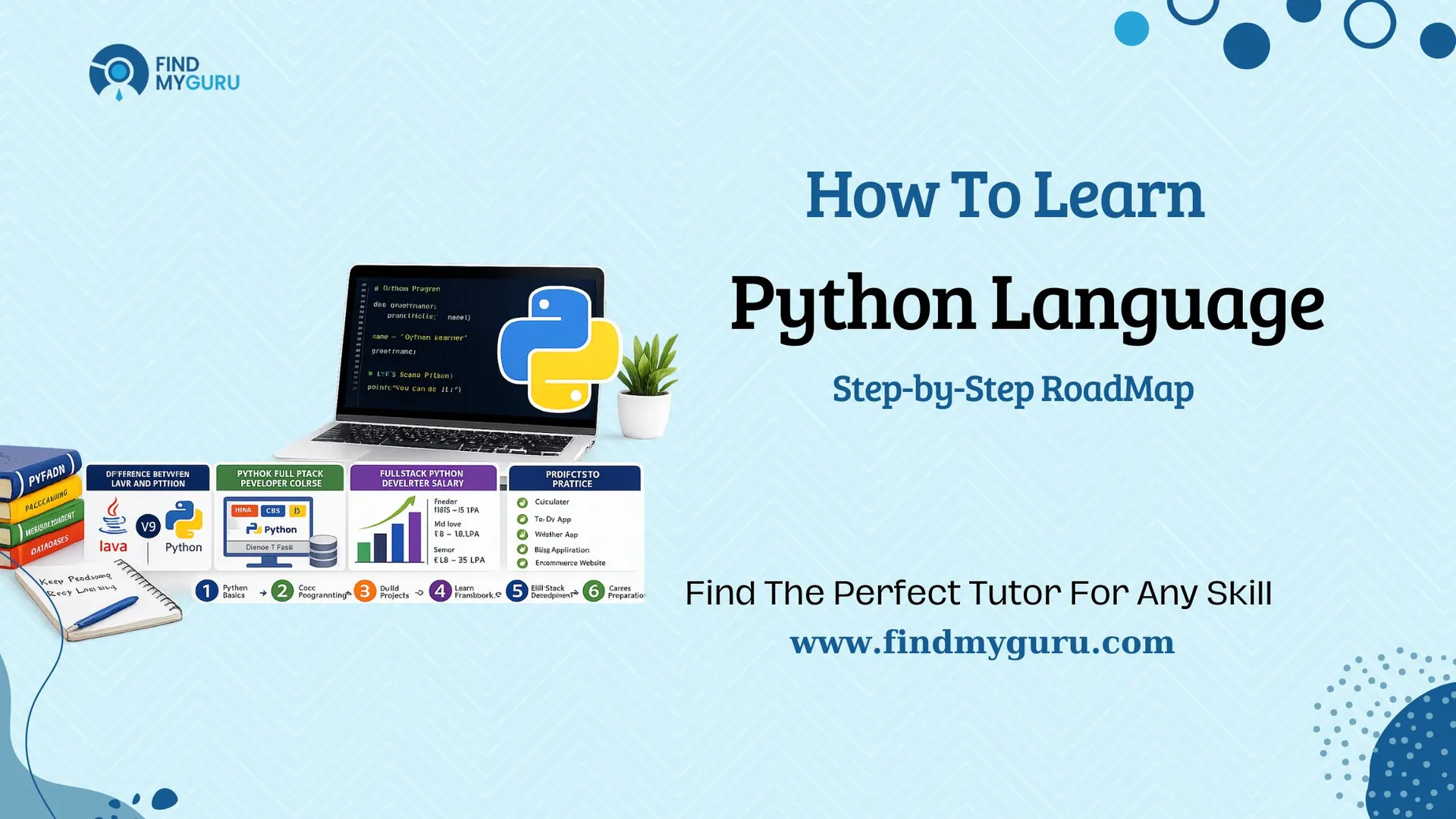
Learning Python is a smart starting point for students interested in programming, automation, web development, and software careers. How to learn python language is a common question among beginners because Python is known for simple syntax, strong community support, and wide industry use. It is used in web development, artificial intelligence, automation, data science, and app development.
Students can learn Python step by step by building fundamentals first, practicing regularly, and moving toward projects and frameworks.Understanding how to learn Python language also helps students explore related paths such as the Python full stack developer course, compare Python with other languages, and understand the full stack Python developer salary landscape. Students looking for additional academic and technical training opportunities may also search for Best Tuition Classes Needed Near Me in Chennai to find structured learning programs, expert mentorship, and personalized guidance that support their programming and career goals.
What Is Python and Why Learn It?
Python is a high-level programming language designed to be readable and beginner-friendly. It uses simple syntax, which makes learning easier compared to many other programming languages. This is one reason students often begin their coding journey with Python.
Python is used in:
Web development
Automation
Artificial intelligence
Data science
Game development
Academic projects
Students choose Python because it helps them focus on logic before dealing with complex syntax rules. It also has strong career relevance, which makes it useful for both learning and future job opportunities. Students seeking personalized guidance and structured learning often search for Best Tuition Python Classes Needed Near Me in Hyderabad to strengthen programming fundamentals, gain hands-on experience, and prepare for academic or professional opportunities in software development.
Step-by-Step Guide to Learn Python Language
A structured roadmap is the best answer to how to learn python language Tutors.
Phase 1: Learn Python Basics
Start with basic concepts:
Variables
Data types
Operators
Conditional statements
Loops
Functions
These topics form the foundation of programming.
Phase 2: Practice Core Programming
After basics, move to:
Lists and dictionaries
File handling
Object-oriented programming (OOP)
Error handling
Modules and libraries
These build problem-solving ability.
Phase 3: Build Beginner Projects
Projects help turn theory into practice.
Examples:
Calculator
To-do app
Quiz program
Number guessing game
Building projects is one of the most important steps in learning Python.
Phase 4: Learn Frameworks
Once core Python is clear, begin frameworks like:
Django
Flask
FastAPI
These are used in real-world applications.
Phase 5: Progress Toward Full Stack
Students interested in web careers can move toward a python full stack developer course Online by adding:
HTML
CSS
JavaScript
Databases
APIs
This expands Python into full stack development.
Best Resources to Learn Python
Students should use reliable resources while learning.
Recommended sources include:
Python official documentation
Practice platforms for coding exercises
Beginner project repositories
Guided tutoring support
Structured courses and worksheets
Using documentation is important because it helps students learn accurate syntax and standard practices.
Common Mistakes Beginners Should Avoid
Many students slow their progress because of avoidable mistakes.
Common mistakes include:
Learning only theory without practice.
Skipping projects too early.
Jumping into advanced frameworks without fundamentals.
Ignoring debugging practice.
Trying to learn too many languages at once.
A steady progression works better than rushing through topics.
Difference Between Java and Python
The difference between java and python is often discussed by beginners.
Python uses simpler syntax and usually has a shorter learning curve. Java often has more verbose syntax and is commonly associated with enterprise systems.
Python is often preferred for:
Beginners
AI and automation
Rapid development
Data science
Java is often chosen for:
Large enterprise systems
Banking applications
Strong object-oriented structures
For many students asking how to learn Python language, Python is usually the easier starting point. Its simple syntax, readability, and beginner-friendly design make it an excellent choice for new programmers. Understanding the Features of Python Programming Language, such as ease of learning, cross-platform compatibility, extensive libraries, and versatility across domains like web development, data science, and artificial intelligence, further explains why Python is often recommended as a first programming language.
Python Full Stack Developer Course Roadmap
A python full stack developer course generally combines frontend and backend skills.
A common roadmap includes:
Frontend:
HTML
CSS
JavaScript
Backend:
Python
Django or Flask
APIs
Database:
MySQL
PostgreSQL
Deployment:
Git
Cloud basics
Hosting
This pathway helps students build complete web applications.
Full Stack Python Developer Salary and Career Scope
The full stack python developer salary depends on skills, projects, experience, and location.
Indicative ranges reported by industry sources show:
Freshers: around ₹3.5–6 LPA
Mid-level: around ₹8–12 LPA
Senior: around ₹15–25 LPA
These are indicative ranges and may vary by company and skill level.
Skills that may improve salary growth include:
Django
APIs
Database skills
Cloud basics
Real project portfolio
Students should focus on skill-building, not salary alone.
Projects to Practice Python
Projects strengthen learning.
Good beginner project ideas:
Calculator
Expense tracker
Weather app
Blog using Flask
Student management project
Projects help students practice logic, debugging, and coding structure.
Learn Python with Expert Guidance
Self-learning can be effective, but many students need structured help to build consistency. Concepts like loops, OOP, debugging, and frameworks often become easier with expert explanation.
Students can explore tutors through find teachers near me and find Python guidance through or explore online learning options at . Learners can also use to search tutors by subject and learning mode. Those seeking personalized support may connect with an online learning tutor India to receive structured guidance and individualized learning plans. Many beginners and working professionals also search for a Python online trainer needed to strengthen programming fundamentals, improve practical coding skills, and accelerate their learning journey.
Structured guidance can support concept clarity, project practice, and doubt solving.
FAQs
How to learn python language as a beginner?
Start with basics like variables, loops, and functions, then practice projects and gradually move to frameworks like Django or Flask.
What is the difference between Java and Python?
Python is generally simpler for beginners, while Java is often used in enterprise-level applications.
What is a python full stack developer course?
It combines Python backend development with frontend tools, databases, APIs, and deployment skills.
What is the full stack python developer salary for freshers?
Indicative entry-level salaries often range around ₹3.5–6 LPA, depending on skills and employer.
How long does it take to learn Python?
With regular practice, beginners can build strong foundations in a few months, though mastery takes longer.
Which framework should beginners learn first?
Many beginners start with Flask for simplicity, while others choose Django for full-feature development.