How to get an IT job without a degree in India
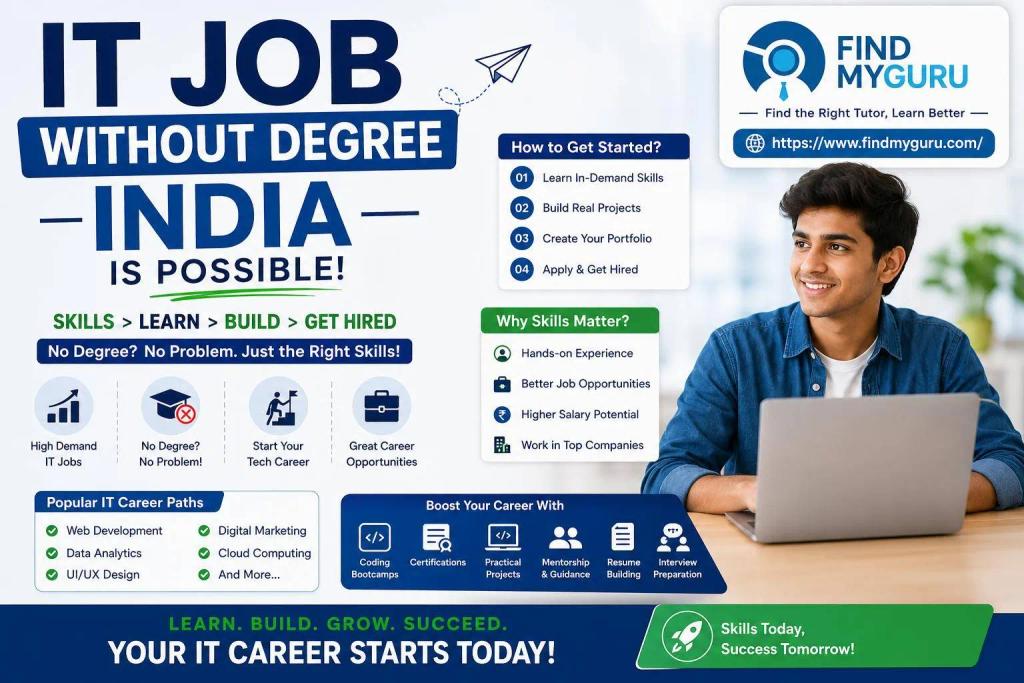
The Indian technology industry has changed significantly in the last decade. Companies now focus more on practical skills, project experience, and problem-solving ability than formal degrees alone. This shift has created new opportunities for students, self-learners, and career switchers searching for an IT Web development Tutors job without degree India.
Many technology roles today depend on demonstrable skill rather than academic background.
According to workforce trend reports from LinkedIn and technology hiring insights discussed by Statista, skills-based hiring continued growing through 2025, especially in software development, cloud computing, cybersecurity, support operations, and digital product environments.
This does not mean degrees have become irrelevant.
It means alternative learning pathways have become more accepted.
Can You Really Get an IT Job Without a Degree in India?
Yes, but skill quality matters heavily.
Companies increasingly hire candidates who can demonstrate technical capability through projects, portfolios, certifications, internships, and practical assessments.
A skills-based hiring model evaluates applicants primarily on demonstrated abilities instead of formal academic credentials.
Startups and product companies often prioritize problem-solving ability and practical knowledge.
Large enterprises may still prefer degrees for some roles, but exceptions increasingly exist for strong candidates.
The strongest opportunities usually come from:
Software development.
Web development.
Data analytics.
Cloud support.
UI/UX design.
Digital marketing technology roles.
Technical support.
Automation testing.
The technology industry values output and adaptability strongly.
Which IT Skills Can Help Without a Degree?
Some technology skills have lower entry barriers compared to traditional engineering pathways.
Web development remains one of the most accessible starting points.
Students can begin with:
HTML.
CSS.
JavaScript.
React.
Backend basics.
Python is another beginner-friendly option because it supports automation, data analysis, scripting, and backend development.
Cloud computing, cybersecurity, and data analytics also offer strong growth opportunities for self-learners.
A technical skill pathway is a structured progression from foundational concepts to job-ready practical capability.
The key is choosing one path and building depth gradually.
Is Self-Learning Enough for IT Jobs?
Self-learning can work if it is structured and consistent.
Many successful developers and analysts learned online through documentation, projects, coding platforms, and open-source practice.
However, random tutorials alone rarely create job readiness.
A structured self-learning roadmap includes foundational theory, guided practice, projects, revision, and interview preparation.
Students should focus on:
Practical projects.
GitHub portfolios.
Problem-solving practice.
Resume building.
Mock interviews.
Consistent project work matters more than passive video watching.
How Important Is a Coding Bootcamp in India?
A coding bootcamp India learners choose can help simplify the learning process and provide structure.
Coding bootcamps are intensive training programs designed to teach practical technical skills within shorter timelines.
The strongest bootcamps focus on:
Real-world projects.
Frontend and backend development.
Interview preparation.
Version control.
Deployment.
Team collaboration.
Some bootcamps also provide placement support and mentorship.
However, students should evaluate quality carefully.
Not every bootcamp guarantees strong learning outcomes.
Project quality and instructor expertise matter more than advertising claims.
Which IT Roles Are Most Accessible for Freshers Without Degrees?
Students searching software job freshers India opportunities without degrees should target beginner-friendly technical roles first.
Entry-level roles often include:
Frontend developer.
Junior web developer.
Technical support engineer.
QA tester.
WordPress developer.
Data support associate.
IT operations support.
Customer success technical associate.
These roles help learners gain industry experience while building stronger technical depth and IT Companies in Hyderabad.
An entry-level software role is a beginner position designed for candidates developing practical technical experience.
After gaining experience, career growth often becomes easier.
Can Career Changers Move Into IT Successfully?
Yes.
Many professionals successfully make a career change to IT India through structured upskilling.
Common transition backgrounds include:
Sales.
Customer support.
Mechanical engineering.
Civil engineering.
Banking.
Teaching.
Operations.
The transition usually requires:
Technical learning.
Project development.
Resume repositioning.
Interview preparation.
Consistency.
Career switching becomes easier when learners focus on one specialization instead of trying to learn every technology simultaneously.
Which Certifications Help Without a Degree?
Certifications can support credibility, especially for beginners and career switchers.
The strongest certifications are practical and industry-recognized.
Examples include:
Cloud certifications.
Google analytics certifications.
Cybersecurity fundamentals.
Frontend development certifications.
Data analytics certifications.
A professional certification validates knowledge in a defined technical domain through assessment or examination.
Certificates alone are not enough.
Practical projects remain essential.
Do Companies in India Hire Based on Skills?
Increasingly, yes.
Many startups and technology-focused companies now evaluate:
Projects.
Coding ability.
Problem-solving.
Communication skills.
GitHub profiles.
Practical assessments.
Interview performance.
According to hiring trend discussions from technology workforce reports published in 2025, companies increasingly emphasize adaptable skills and practical capability over formal educational pedigree for certain technical roles.
This shift is especially visible in startup ecosystems.
How Should Beginners Build a Portfolio?
A portfolio demonstrates practical ability.
Students should create projects aligned with their target role.
For example:
Web developers should build responsive websites.
Data analysts should create dashboards.
Cloud learners should document deployments.
Cybersecurity learners should showcase labs and technical writeups.
A technical portfolio is a collection of projects and work samples demonstrating practical capability.
GitHub remains highly valuable for software-related roles.
Employers increasingly review public project work.
What Is the Salary Potential Without a Degree?
Salary depends more on skill quality, specialization, communication ability, and experience than degree status alone.
Entry-level salaries may initially vary.
However, experienced professionals without degrees can still achieve strong compensation in software development, cloud engineering, analytics, and product environments.
The technology industry rewards practical output heavily over time.
Specialized skills often improve earning potential significantly.
Is English Communication Important for IT Jobs?
Yes.
Technical knowledge matters heavily, but communication also affects interviews, teamwork, and client interaction.
Students should improve:
Professional communication.
Email writing.
Interview speaking.
Technical explanation ability.
Remote collaboration skills.
Communication becomes especially important in multinational and client-facing environments.
Can Online Learning Help Build an IT Career?
Yes.
Online learning has become one of the most common paths into technology careers.
Students can combine:
Structured courses.
Coding practice.
Documentation reading.
Projects.
Communities.
Mock interviews.
Freelance work.
According to Google Search Central guidance, expertise and practical usefulness improve content quality. The same principle applies to technical learning. Real project work creates genuine skill development.
Should Beginners Learn Through Self-Study or a Tutor?
Some learners progress effectively through self-study.
Others benefit from structured mentorship.
A tutor can help simplify concepts, review projects, improve coding practices, and guide interview preparation.
Platforms such as best tutoring platform India can help learners explore programming tutors, web development guidance, and technology learning support aligned with career goals.
Structured support often reduces confusion during early learning stages.
What Mistakes Should You Avoid?
One major mistake is trying to learn too many technologies at once.
Another is consuming tutorials without building projects.
Some learners focus only on certificates while avoiding practical work.
Others apply for jobs too early without portfolio preparation.
Strong candidates usually focus on:
One specialization.
Consistent practice.
Project building.
Interview preparation.
Communication skills.
This creates better long-term growth.
Conclusion
Students searching for an IT job without degree India should understand that modern technology careers increasingly value practical skills and demonstrable ability.
A degree can help, but it is no longer the only pathway into IT.
Students exploring coding bootcamp India programs, software job freshers India opportunities, or a career change to IT India should prioritize practical learning, projects, communication skills, and portfolio development.
The strongest career growth comes from consistent improvement and real technical capability.
Skills open the door.
Projects prove the skill.
FAQ SECTION
Q: Can I get an IT job in India without a degree?
A: Yes. Many companies now hire based on practical skills, projects, certifications, and technical ability instead of degrees alone.
Q: Which IT skills are best for beginners without degrees?
A: Web development, Python, data analytics, cloud computing, and technical support are common beginner-friendly paths.
Q: Is a coding bootcamp in India worth it?
A: A strong coding bootcamp with practical projects and mentorship can help learners build job-ready technical skills faster.
Q: Can I switch careers into IT in India?
A: Yes. Many professionals successfully transition into IT through structured learning and project-based skill development.
Q: Do companies hire freshers without engineering degrees?
A: Many startups and skill-focused companies do, especially when candidates have strong portfolios and practical experience.
Q: How important is a portfolio for IT jobs?
A: Portfolios are extremely important because they demonstrate real technical skills and project experience to employers.