Online Hindustani Classical Music Tutors
Tutors & Institutes:
The "FindMyGuru for Tutor" App is LIVE! Download now and never miss a student enquiry.
Tutors & Institutes:
Refer a tutor and earn rewards when they join. Refer & Earn



Find the best Hindustani Classical Music trainers near you. Compare tutors, check reviews, and start learning with courses matched to your goals.
Online Hindustani Classical Music Tutors
Hindustani classical music doesn't teach well from a video you can pause. A raga's grammar, a swara that's a hair flat, the exact curve of a meend — these need a teacher listening to your voice or instrument in real time and correcting it on the spot. That's the gap online Hindustani classical music tutors on FindMyGuru fill: live, one-on-one sessions with independent teachers, not pre-recorded course modules.
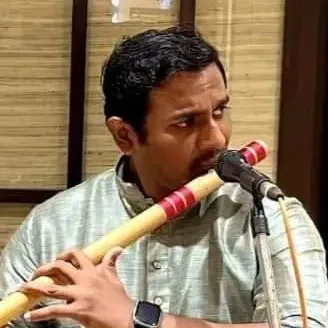
This page lists individual Hindustani classical tutors — vocal, sitar, tabla, flute (bansuri), and harmonium — teaching live over video. It is not a single branded academy with one fixed curriculum; it's a marketplace where you compare teachers by gharana background, specialisation, and teaching style, and pick the one whose approach fits how you learn. If you're specifically searching for Carnatic music tutors instead, FindMyGuru lists those separately — the traditions, repertoire, and teaching lineage are distinct enough that they warrant their own search rather than a shared page.
A tutor's gharana (Kirana, Jaipur-Atrauli, Agra, Gwalior, and others) shapes their approach to ornamentation, tempo, and raga treatment. It's not that one is "better" — it's that the teaching style differs, and knowing a tutor's background helps you understand what you'll actually be learning.
Vocal training, sitar, tabla rhythm work, and bansuri each need a specialist — a general "music teacher" tag isn't the same as someone who teaches Hindustani vocal specifically. If you're preparing for a Visharad or grade examination, say so upfront; not every tutor teaches to an exam syllabus.
Ask the tutor to correct one thing in your first session — a swara, a taal count, a bow stroke. How clearly and patiently they explain it tells you more than years of experience listed on a profile.
Riyaz (practice) happens daily; classes happen weekly. Ask whether your tutor reviews practice recordings or gives between-session feedback — this varies a lot by teacher and matters more than most learners expect going in.
Consistency matters more than duration here. A focused 20–30 minutes of daily riyaz — starting with sur sadhana (steady long notes against a tanpura drone or app), moving into alankars, then whatever raga or bandish your tutor assigned — builds pitch accuracy and raga memory far better than an occasional two-hour session. Recording your own practice and comparing it against your tutor's demonstration is one of the most effective self-correction habits, and many FindMyGuru tutors will review short practice clips between sessions if you ask.
Three groups make up most of the demand. Children and school-age students usually start with sur sadhana and basic bandishes, often building toward a Prathama or Visharad-track examination over several years. Adult beginners — a large and growing group — learn for personal enrichment or a cultural reconnection, at a slower, self-paced rhythm without exam pressure. Serious learners and semi-professionals use tutors to refine a specific gap — taan development, a particular raga's nuance, or stage-performance readiness — rather than starting from zero.
Yes, with one caveat: live, interactive sessions work; passive video content largely doesn't for this discipline. A tutor needs to hear your pitch and timing in real time to correct it — which is exactly what 1-on-1 video sessions on FindMyGuru are built for, as opposed to a pre-recorded course you watch on your own.
Neither is more difficult in any measurable sense; they're structurally different disciplines. Hindustani places heavier emphasis on improvisation, meend (glides), and a raga's slow unfolding (vilambit to drut); Carnatic has a more codified compositional structure (kritis, varnams) with intricate rhythmic patterns (korvais) as a core skill. Which one feels "harder" usually comes down to which structure suits your ear and temperament — not an objective difficulty ranking.
Fees depend on the tutor's experience, gharana reputation, and instrument, so there's no single fixed rate — vocal beginner sessions tend to sit at a more accessible end, while advanced raga work with an established performer-teacher, or instrumental tuition like sitar and tabla, is usually priced higher by the individual tutor. Always confirm the actual rate on the tutor's own profile rather than going by a general market number.
Every tutor profile is verified before listing, so you're contacting a real teacher, not an empty shell page. You can filter by instrument, gharana, and specialisation, read what past students said, message the tutor directly, and book a free trial session before any payment is involved — no bundled course fee, no subscription lock-in.
If you've been putting off learning Hindustani classical music because you couldn't find the right guru nearby, that's no longer the constraint. Browse Hindustani classical music tutors, shortlist two or three whose gharana and teaching style appeal to you, and book a free trial to hear how they teach before committing. Teach Hindustani classical music yourself? List your profile and start reaching students directly.