
Online CBSE Accounts Tutors

Skill:
Cbse Accounts, Isc Accounts, A and As Le...
Skill:
Cbse Accounts, Accounts, Audit and Taxat...
Skill:
Cbse Accounts, Accounting and Bookkeepin...
Tutors & Institutes:
The "FindMyGuru for Tutor" App is LIVE! Download now and never miss a student enquiry.
Tutors & Institutes:
Refer a tutor and earn rewards when they join. Refer & Earn



Find the best Cbse Accounts trainers near you. Compare tutors, check reviews, and start learning with courses matched to your goals.
Online CBSE Accounts Tutors
CBSE Accountancy isn't one subject — Class 11 and Class 12 test almost entirely different skills, and most "accounts tutor" listings don't say which one they actually teach well. This page is built to fix that: find a tutor matched to your exact chapter, not just your board.
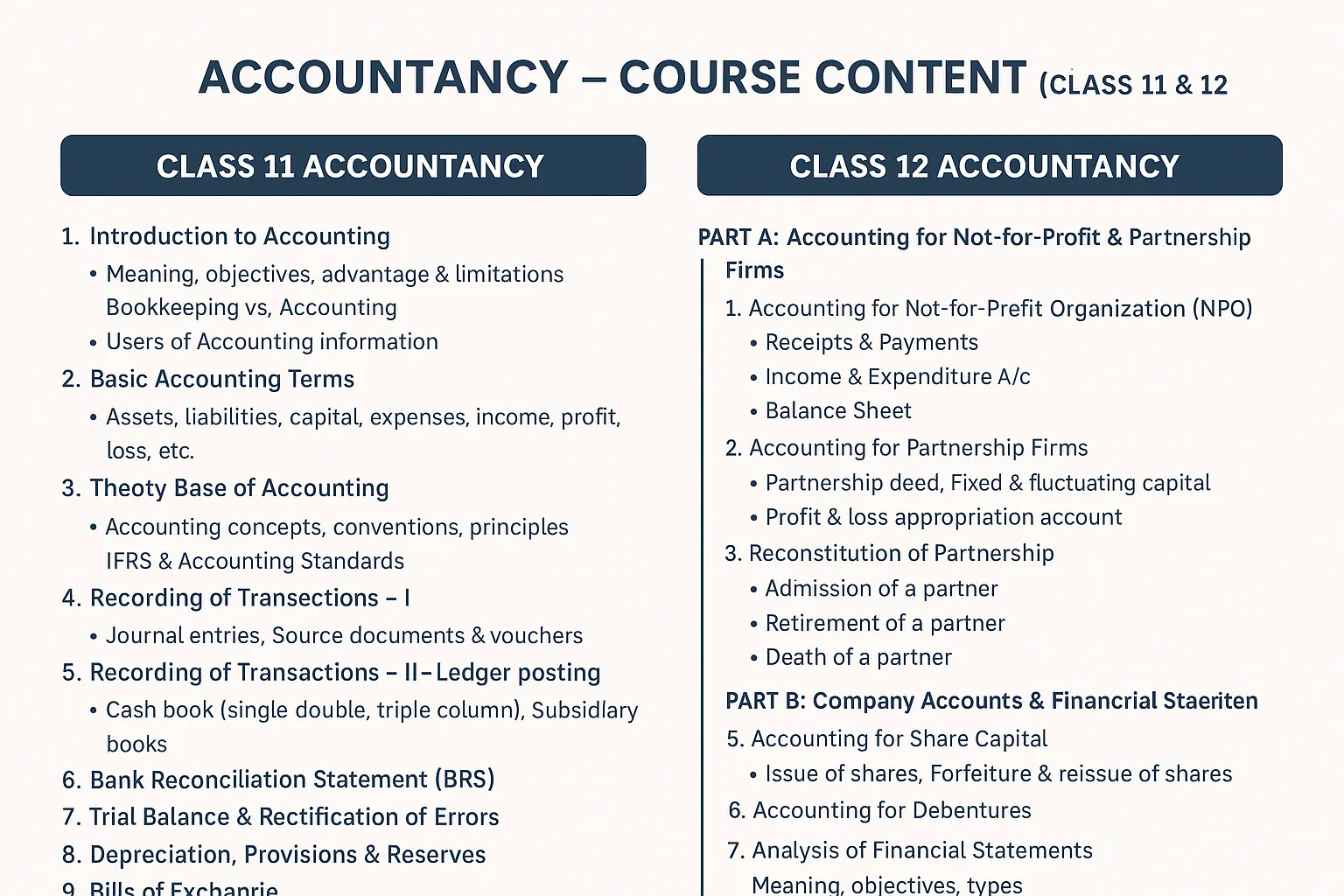
Students often assume accountancy carries over cleanly from Class 11 to 12. It doesn't, quite. Class 11 is foundation-heavy — get the logic of double-entry wrong here and every later chapter compounds the confusion. Class 12 shifts almost entirely into application: partnership adjustments, company accounts, and ratio-based analysis that reward speed and accuracy over conceptual novelty.
Class | Core Chapters | What Trips Students Up |
|---|---|---|
Class 11 | Theory base of accounting, recording of transactions, trial balance, bank reconciliation, financial statements, depreciation | Getting comfortable with debit/credit logic before the volume of journal and ledger entries increases |
Class 12 | Partnership accounts (admission, retirement, dissolution), company accounts (share capital, debentures), analysis of financial statements, cash flow statement | Partnership reconstitution numericals and cash flow classification — the two chapters that cost the most marks when rushed |
A tutor who's genuinely strong in Class 12 partnership and company accounts isn't automatically the right fit for a Class 11 student still building foundational entries — worth checking which chapters a shortlisted tutor actually specialises in, not just which class they list.
Here's something most generic tuition sites skip entirely: CBSE Accountancy and the CUET Commerce paper overlap substantially, since both draw from the same NCERT accountancy syllabus. If you're a Class 12 student also targeting a commerce degree through CUET, a tutor who teaches both together — rather than treating them as separate subjects — saves real prep time. It's worth specifically asking a tutor whether they cover CUET-pattern MCQs alongside board-exam theory answers, since the question formats differ even when the syllabus doesn't.
Accountancy is unusual among CBSE subjects — it's genuinely learnable from recorded content right up until numericals get compound. A few signals it's time for a real tutor:
Journal and ledger entries take you noticeably longer than classmates, suggesting the underlying logic isn't fully set, not just practice volume
Partnership reconstitution problems (admission, retirement, death of a partner) consistently confuse you on which adjustments go where
You can solve textbook numericals but freeze on board-pattern variations — a sign of memorised steps rather than understood logic
Company accounts and cash flow statements feel like separate subjects rather than natural extensions of what came before
If none of these apply and you're just looking for extra practice sets, a tutor may be overkill — worth being honest about that before booking.
A verified profile alone doesn't tell you if someone teaches the way you learn. Before committing:
Profiles that list specific strong areas — partnership accounts, company accounts, CUET Commerce — tend to reflect real depth rather than a generic commerce-teacher listing.
Ask directly in the trial session: do they walk through the logic of an adjustment entry, or just the steps to the answer? The first builds transferable understanding; the second gets you through one paper pattern and stalls on a variation.
Accountancy board papers follow fairly consistent patterns year to year. A tutor actively using recent past papers in sessions is generally a better sign than one relying only on textbook exercises.
Accountancy rewards live problem-solving more than most subjects — watching someone work through a tricky reconstitution numerical in real time, and being able to interrupt with a doubt mid-step, tends to matter more here than in purely conceptual subjects. Most tutors on FindMyGuru offer 1-on-1 sessions specifically for this reason, though some also run small-batch sessions for students who prefer working through problems alongside peers. Either way, confirm the session format matches how you actually retain the material.
Rates depend mainly on tutor experience and whether they specialise narrowly (Class 12 company accounts, CUET Commerce) or teach the broader commerce stream. Tutors with CA-level qualifications or several years of board-exam-specific teaching typically price higher than newer tutors — neither is automatically the "right" choice, since a newer tutor with strong recent-syllabus familiarity can sometimes be the better fit. Always check the exact rate on the tutor's profile rather than assuming a fixed market price.
Every tutor profile goes through verification before it's listed — several tutoring platforms in this space explicitly don't verify profile claims, which makes comparison harder for parents and students. On FindMyGuru, you can filter by chapter specialisation, message tutors directly without a call-centre relay, and book a free trial session before any payment changes hands.
Whether you're rebuilding Class 11 fundamentals or need someone who can walk through Class 12 partnership reconstitution without rushing, browse CBSE Accounts tutors on FindMyGuru, check their chapter specialisation, and book a free trial before deciding. Teaching accountancy yourself? List your profile and set your own rates.