
Hindustani Flute / Bansuri
7 Yrs
Skills: Abrsm Music Theory, Flute, Classical Music, Hindustani Classical Music, Music Theory, Transverse flute, Hindustani Music, Western Music Theory



Find and compare online flute tutors for Hindustani, Carnatic, and Western flute — from absolute beginners to performance level. Browse verified profiles, check fees, and book a trial class directly.
7 Yrs
Skills: Abrsm Music Theory, Flute, Classical Music, Hindustani Classical Music, Music Theory, Transverse flute, Hindustani Music, Western Music Theory

20 Yrs
Skills: Flute, Music, Rhythm, Transverse flute

15 Yrs
Skills: Instruments, Flute, Classical Music, Music Theory, Music, Transverse flute
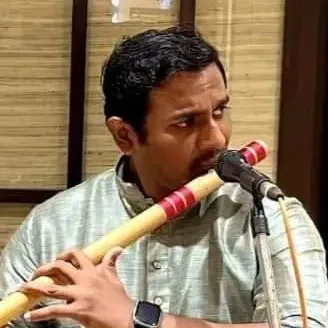
10 Yrs
Skills: Flute, Hindustani Classical Music, Music Theory, Music, Transverse flute, Hindustani Music

8 Yrs
Skills: Flute, Transverse flute
Browse qualified tutors, compare profiles, and connect directly.

Join thousands of tutors who are sharing their knowledge and helping students succeed.


We'll match you with tutors based on your goals, budget, and schedule.
Chat With UsYes, flute is one of the easier instruments to pick up in an online format, because a tutor can watch your breath, lips, and finger position on video just as closely as in person — the main thing you lose is someone physically adjusting your hand. On FindMyGuru, you can browse tutors who teach bansuri (Hindustani flute), Carnatic flute, and Western concert flute, filter by experience level and language, and message them directly before you commit to a single class.
Most people land on this page for one of two reasons: they want to start from zero, or they've hit a plateau with self-teaching and want an actual instructor to fix bad habits before they set in. Either way, the tutor you need — and what you should expect to pay — depends a lot on which of those two boxes you're in.
Not every good flute player is a good flute teacher. A few things worth checking before you book a trial:
Style match first. A Carnatic flute specialist and a Hindustani bansuri teacher approach breath, ornamentation (gamakas vs. meend), and even how they hold the instrument differently. If you have a style in mind — say you want to play film music vs. classical ragas — say so upfront.
Teaching lineage or training background. Many tutors list their guru or institution (e.g., trained under a Hindustani gharana, or a diploma from a music college). This isn't a ranking system, but it tells you what tradition they'll teach in.
How they run an online class. Ask if they use a metronome/tanpura app, share recorded practice tracks, or record the session for you to review. A tutor who only "plays and expects you to follow" is harder to learn from online than in person.
Trial class first. A single trial tells you more than any profile description — you'll know within 20 minutes if their pace and teaching style suit you.
Response time and availability. Check how quickly a tutor replies and whether their weekly slots actually match your schedule, especially if you're coordinating across time zones (a common ask for NRIs learning bansuri online).
Online flute learners on FindMyGuru generally fall into a few groups, and it's worth being specific about which one you are when you message a tutor:
Absolute beginners — no prior music background, need help even with holding the flute and producing a clean first note.
Kids and school-age learners — often for a school talent event, extracurricular credit, or a parent's own interest in classical training.
Adults returning to music — frequently people who learned briefly as children or teenagers and want to restart, sometimes specifically bansuri or Carnatic flute for cultural or devotional reasons.
Intermediate players wanting correction — self-taught from YouTube, can play basic tunes, but want a teacher to fix embouchure or breath control before advancing.
Exam or grade-focused learners — working toward a music school's internal grading, a college audition, or (less commonly in India) a Trinity/ABRSM-style Western flute exam.
Formats vary by tutor: most offer 1:1 live video classes, some run small group batches for kids, and a few provide recorded curriculum + weekly live doubt-clearing as a lower-cost option. If a tutor doesn't list their format clearly on their profile, it's a fair first question to ask.
If you're new to this, it helps to know upfront that "flute" in India usually means one of three fairly different things, and picking the wrong starting point can slow you down:
Bansuri (Hindustani classical): A side-blown bamboo flute, no keys, used for ragas in North Indian classical music. Most Bollywood and devotional flute music also traces back to bansuri technique.
Carnatic flute: Also bamboo and side-blown, but built and fingered differently to suit South Indian classical ragas and gamakas (the characteristic ornamentation).
Western concert flute: The metal, keyed instrument used in orchestras, school bands, and Western classical or contemporary music.
A tutor who's excellent at one of these isn't automatically the right fit for another — this is the single most common mismatch we see when learners pick a tutor purely by star rating without checking their specialisation.
Fees for online flute tutoring in India vary quite a bit depending on the tutor's experience, the style taught, and whether it's a 1:1 or group format. As a rough, indicative range: beginner-friendly tutors and student-teachers tend to sit at the lower end, while tutors with a strong performance background, All India Radio grading, or years of professional teaching experience charge more. Group batches for kids are usually cheaper per session than 1:1 adult classes. Rather than anchoring to a single number, it's worth comparing 3–4 tutor profiles on FindMyGuru side by side — fees are listed per tutor, so you can weigh experience against budget directly instead of guessing.
FindMyGuru isn't a school with its own fixed curriculum or fixed-price packages — it's a discovery platform where you compare verified tutor and institute profiles, see their teaching style, experience, and fee range, and message them directly to arrange a trial. There's no commission charged to learners, and you're never locked into a single tutor by the platform — if the first trial isn't a fit, you can message another tutor the same day. Profiles are built around real teaching details (style specialisation, experience, languages spoken, class format) rather than generic listings, so you're comparing tutors on the things that actually matter for learning flute.
Flute classes near you, offline: If you'd rather learn in person, find local flute tutors near you for face-to-face classes where a teacher can physically adjust your embouchure and finger position.
Bansuri-specific search: Looking specifically for Indian flute rather than Western? You can narrow your search directly to bansuri and Hindustani/Carnatic flute tutors rather than browsing all flute profiles.
City-specific search — Hyderabad and beyond: Prefer someone local for occasional in-person sessions alongside online classes? Search flute tutors in Hyderabad or your own city to see tutors who offer both formats.
Other instruments: If flute turns out not to be the right fit, FindMyGuru also lists tutors for tabla, guitar, keyboard, and vocal music — useful if you're still exploring which instrument suits your child or yourself.
Browse verified online flute tutors, compare their teaching style and fees, and message a couple of them today — most learners find their first trial class within a day of reaching out. If you teach flute and want to reach students actively searching for lessons, you can list your tutor profile on FindMyGuru for free and start receiving direct inquiries.
Flute is one of the more video-friendly instruments to learn online because a tutor can clearly see your lip position, breath, and finger placement on camera. The main limitation is that a teacher can't physically adjust your hold, so look for tutors who actively correct posture and embouchure through verbal and visual cues rather than just demonstrating and moving on.
There's no official ranking of Indian flute players, but Pandit Hariprasad Chaurasia is widely regarded as the most celebrated living master of the bansuri, credited with bringing it to international classical stages. Pandit Pannalal Ghosh is separately credited as the pioneer who first established bansuri as a serious classical concert instrument.
In three months of consistent practice, most beginners can produce a clean, steady tone, play basic scales, and manage a few simple tunes — but that's early-stage playing, not mastery. Real progress depends heavily on daily practice time and whether you have a teacher correcting your breath and finger technique from the start, since self-taught bad habits usually take longer to unlearn than to prevent.
There isn't a single agreed-upon "best" YouTube flute teacher — quality varies a lot by which tradition (Hindustani, Carnatic, Western) and level you're looking for, and YouTube can't give you real-time correction. It works well as a supplement to structured lessons, but most learners hit a plateau with YouTube alone because there's no one watching their embouchure or breath support and correcting it live.
You can get partway there — many self-taught players learn to produce a basic tone and play simple songs from videos and tutorials. But breath control, posture, and finger technique are hard to self-correct because you can't hear or see your own mistakes the way a teacher can, so most self-taught learners eventually plateau or develop habits that take longer to fix later than they would have taken to learn correctly.
Live 1:1 classes are generally better for flute specifically, because so much of learning correct technique depends on real-time correction of breath and finger position — something a recorded course can't do. Recorded courses can work as a low-cost way to learn theory or repertoire, but they work best paired with at least occasional live sessions for technique correction.
Yes — tutor profiles on FindMyGuru list the levels they teach, from absolute beginner through advanced/performance level, so you can filter for tutors who specifically take on intermediate students. It's worth messaging a tutor directly with where you currently are (e.g., "I can play basic scales and a few film tunes") so they can confirm it's the right fit before you book a trial.
Fees vary by the tutor's experience and specialisation rather than following a fixed rate — newer or student-teachers are generally more affordable, while tutors with strong performance credentials or years of teaching experience charge more. Comparing a few tutor profiles side by side on fees, experience, and teaching style is a more reliable way to budget than expecting one standard number.