Pillars of Digital Marketing
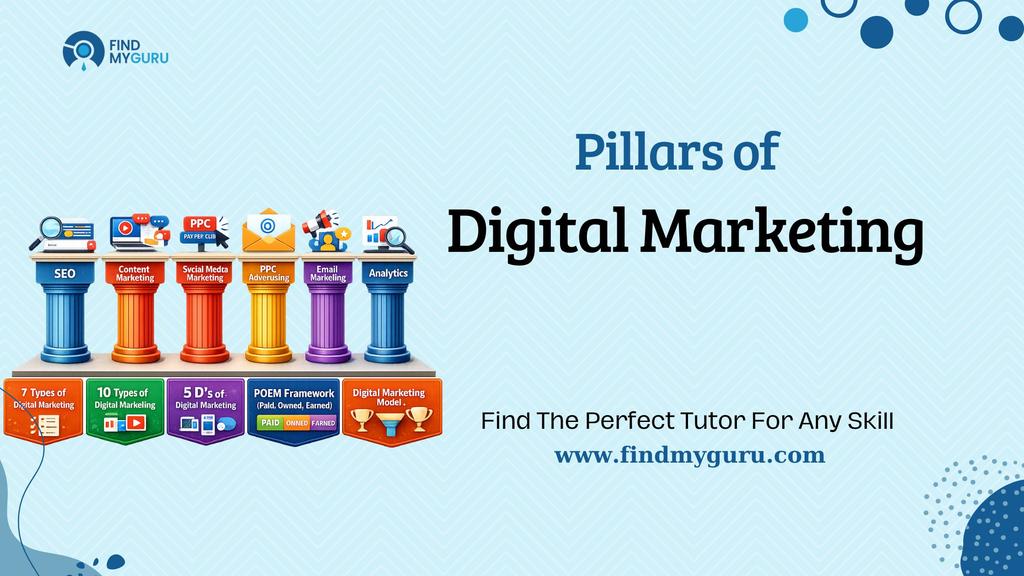
Digital marketing has revolutionized how businesses connect with customers online. Unlike traditional marketing, digital marketing includes a broad set of strategies designed to drive visibility, engagement, and conversions across digital channels. Understanding the pillars of digital marketing is essential for building effective campaigns, adapting to market trends, and achieving real results.
Today, businesses need a mix of foundational elements, including SEO, content, social media, paid advertising, analytics, and more. This article explains the key pillars, types of digital marketing (like the 7 types and 10 types), frameworks like the 5 D’s, and best practices to use them together. If you’re planning a career in this field, structured guidance from online Digital Marketing trainer needed can help you build skills faster and more effectively.
What Are the Pillars of Digital Marketing?
The pillars of digital marketing are the essential strategies and tactics that businesses use to grow online. These foundational elements work together to create a comprehensive digital presence and drive business goals. A strong digital marketing foundation empowers companies to increase brand visibility, engage audiences, and boost conversions. Learners searching for top tutoring services India often explore structured guidance to better understand these concepts and apply them effectively in real-world digital marketing scenarios.
Core Pillars of Digital Marketing
While frameworks vary, most digital marketing strategies rest on several core pillars: understanding the Scope of Digital Marketing, which includes SEO, content marketing, social media, paid advertising, email marketing, and analytics, all of which work together to build a strong online presence and drive business growth.
1. Search Engine Optimization (SEO)
A SEO is the process of optimizing a website to rank higher in search engine results. It includes keyword research, high-quality content creation, on-page optimization, and technical best practices. SEO helps businesses attract organic traffic over the long term.
2. Content Marketing
The Content marketing involves creating valuable, relevant, and consistent content to attract and retain an audience. This can include blog posts, videos, infographics, and guides that inform, engage, or solve problems for your audience. Content is often called the backbone of digital marketing because it supports SEO, social media, email marketing, and more.
3. Social Media Marketing
Social media marketing uses platforms like Facebook, Instagram, LinkedIn and TikTok to build brand awareness, foster engagement, and drive conversions. Marketers share content, engage with customers, and run targeted ads that reach audiences where they spend time online.
4. Pay-Per-Click (PPC) Advertising
PPC is a paid advertising model where brands pay each time a user clicks on their ad. Platforms like Google Ads, Meta Ads, and others enable precise targeting and controlled budgets. PPC delivers fast visibility and measurable results, making it a powerful pillar in digital strategies.
5. Email Marketing
Despite newer channels emerging, email marketing continues to deliver high ROI. It helps nurture leads, announce promotions, and maintain direct communication with subscribers. Email campaigns can be personalized and automated to deliver timely, relevant content.
6. Analytics & Data
Data and analytics are the backbone of performance-driven marketing. Tools like Google Analytics help marketers monitor traffic, understand user behavior, measure campaign effectiveness, and make data-informed decisions. Analytics allows refinement and optimization of strategies across pillars.
7. Affiliate & Influencer Marketing
Affiliate and influencer marketing leverage partnerships with individuals or other brands to promote products. Affiliates earn commissions for sales or leads, while influencers use their followers and credibility to amplify messages. These approaches expand reach and trust.
7 Types of Digital Marketing
Digital marketing encompasses several key types of strategies. These include:
Search Engine Optimization (SEO)
Pay-Per-Click Advertising (PPC)
Social Media Marketing
Content Marketing
Email Marketing
Affiliate Marketing
Influencer Marketing
Each type plays a unique role within the digital ecosystem, and mastering multiple can lead to better career prospects and campaign outcomes.
10 Types of Digital Marketing
In a broader classification, digital marketing can include additional categories such as:
SEO
Social Media Marketing
Content Marketing
Email Marketing
PPC Advertising
Affiliate Marketing
Influencer Marketing
Video Marketing
Mobile Marketing
Marketing Automation
5 D’s of Digital Marketing
The 5 D’s of digital marketing provide a framework for understanding the digital space from a strategic lens:
Digital Devices: Smartphones, tablets, and computers used to access digital content.
Digital Platforms: Online platforms like social media sites and search engines.
Digital Media: Digital content formats, including ads, content pieces, and videos.
Digital Data: Customer information and insights used to drive decisions.
Digital Technology: Tools and technologies such as AI, automation, and analytics platforms.
Understanding these elements helps marketers design more cohesive and user-centric strategies by thinking in terms of how users interact across digital resources.
POEM Framework in Digital Marketing
The POEM framework is a popular model used to classify marketing activities:
Paid Media: Advertising that requires payment to display on search engines and social platforms.
Owned Media: Digital assets owned by the brand, such as websites and email lists.
Earned Media: Publicity gained through mentions, shares, reviews, or influencer promotions.
Using this framework helps marketers balance promotional efforts while maximizing visibility and engagement across channels.
Digital Marketing Models
Several models guide strategy design in digital marketing. For example:
SOSTAC® Model: A planning model for marketing strategy that includes Situation, Objectives, Strategy, Tactics, Action, and Control.
Marketing Funnel / AIDA Model: Focuses on Awareness, Interest, Desire, and Action stages.
Customer Journey Mapping: Maps user interactions from initial discovery to conversion.
These models help structure campaigns and ensure all pillars align with business goals.
How Pillars Work Together
No single element exists in isolation. For example:
SEO drives organic growth, while PPC fills visibility gaps.
Content fuels SEO, social media engagement, and email outreach.
Analytics provides insights that improve performance across all pillars.
Integrating pillars into a coherent strategy enhances effectiveness and long-term success.
Importance of the Pillars for Businesses
The pillars of digital marketing help businesses:
Generate relevant traffic
Build brand awareness
Engage target audiences
Turn prospects into customers
Track and evaluate ROI
A strategic approach supported by strong foundational pillars ensures scalable and measurable growth.
Conclusion
Digital marketing is a dynamic and evolving discipline built on essential pillars such as SEO, content, social media, paid ads, email marketing, analytics, and collaborations like influencer marketing. Understanding and applying these pillars — alongside frameworks like the 5 D’s and POEM — empowers businesses to connect meaningfully with audiences and achieve measurable results. Students searching for the Best Home Private Tutors Needed Near Me in New Delhi often benefit from structured learning support to better understand these digital marketing frameworks and apply them effectively in practice.
For those looking to enhance their skills, especially within competitive landscapes, expert mentorship such as Best Home Private Digital marketing Trainer Needed Near Me in Hyderabad can help you master these pillars and turn knowledge into result-driven campaigns.
Frequently Asked Questions (FAQs)
1. What are the main pillars of digital marketing?
The main pillars include SEO, content marketing, social media marketing, paid advertising (PPC), email marketing, analytics, and affiliate/influencer marketing.
2. What are the 7 types of digital marketing?
They include SEO, PPC, social media marketing, content marketing, email marketing, affiliate marketing, and influencer marketing.
3. What are the 10 types of digital marketing?
This list expands to include video marketing, mobile marketing, and marketing automation in addition to the core seven.
4. What are the 5 D’s of digital marketing?
The 5 D’s are Digital Devices, Digital Platforms, Digital Media, Digital Data, and Digital Technology.
5. What is the POEM framework in digital marketing?
POEM stands for Paid Media, Owned Media, and Earned Media, helping classify marketing activities by reach and control.
6. Why are pillars of digital marketing important?
They form the foundational elements that guide strategy, improve engagement, and ensure measurable results.